Vacation planning has a way of filling up fast with flights, hotels, itineraries, and packing lists that leave pet preparation until the final days before departure, which is exactly when the scramble to remember everything your pet needs for a successful boarding stay tends to create the most stress for everyone involved. When The Wright Pet works with pet owners in Eastlake, Mentor, Willoughby, Willowick, and the surrounding Lake County communities, preparing for vacation boarding, the consistent theme we hear from owners who had a smooth experience is that they started preparing earlier than they thought they needed to, and the ones who had a stressful departure wished they had done the same.
This step-by-step checklist covers everything dog and cat owners need to prepare before a boarding stay, from vaccines and medications to comfort items and emergency contacts, so that your pet’s boarding experience is as smooth and low-stress as possible for both of you.
Start Here: Book Early and Confirm Requirements
The preparation process for a boarding stay begins well before the stay itself, and the first step is confirming availability and reviewing the specific requirements of the boarding facility for the dates you need.
Boarding availability during peak vacation periods, including summer, holiday weekends, and school breaks, fills quickly in the Eastlake and Mentor area, and waiting until the week before departure to book is a reliable way to ensure your preferred facility does not have space for your pet on the dates you need. Booking as early as your travel dates are confirmed gives you access to the best availability and the time to complete all preparation steps without rushing.
Vaccine requirements are a non-negotiable preparation item that must be confirmed and completed well in advance of the boarding stay. Most reputable boarding facilities require current vaccines as a condition of admission, and some vaccines require a series of doses or a waiting period after the final dose before they provide the protection that the facility’s admission policy is based on. Discovering that your pet’s vaccines are out of date or that a required vaccine needs a waiting period of two days before departure is a situation that appropriate advance planning can prevent completely. Pet boarding vaccines and everything you need to know breaks down e which vaccines are typically required for boarding and why each one matters for your pet’s safety and the safety of other animals in the facility.
Review the facility’s specific policies for food, medications, bedding, and personal items before the stay so that you arrive prepared with everything the facility needs and nothing that violates their policies. Policies vary between facilities, and assuming your previous boarding facility’s policies apply to a new one is a common source of avoidable confusion at drop-off.
Vaccines and Health Documentation Checklist
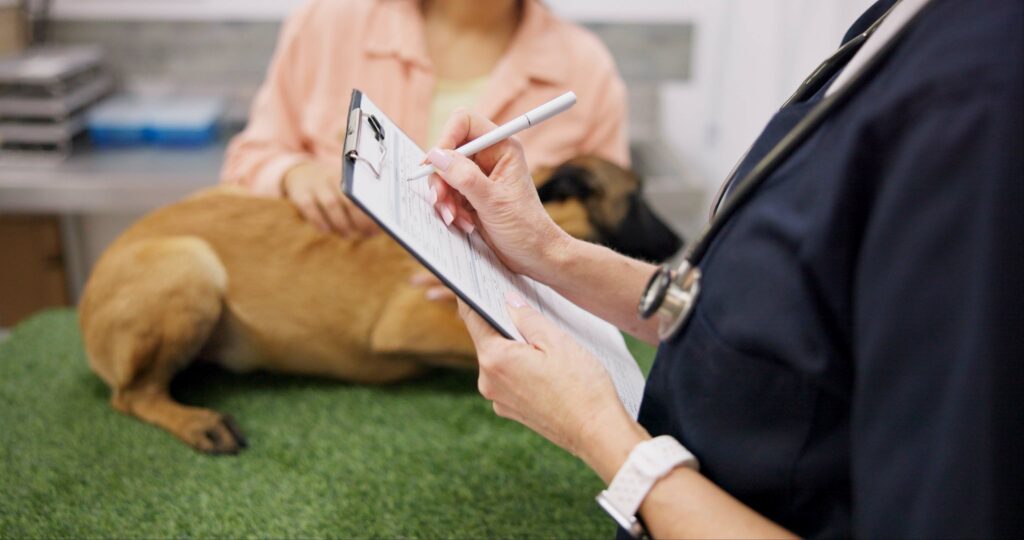
Confirming vaccine status is the health preparation step with the longest lead time and the most serious consequences if it is not completed before the stay. Work through this section first and give yourself at least two to four weeks before the boarding date to address any gaps.
For dogs boarding at The Wright Pet, current Bordetella, Rabies, Leptospirosis, CIV, and DHPP DHLPP (DHPP + Leptospirosis) is also accepted. Vaccines are required. Bordetella, which protects against kennel cough, is the vaccine most commonly found to be out of date at drop-off because it requires more frequent boosters than some other vaccines and is sometimes deprioritized between boarding stays. Confirm the booster date for Bordetella specifically and schedule a veterinary appointment to update it if needed, keeping in mind that some facilities require the vaccine to have been administered at least forty-eight to seventy-two hours before the stay to allow immune response development. CIV or Canine Influenza Vaccine protects dogs against the more severe H3N8 and N3N2 strains of canine influenza. Confirm prior to boarding that your veterinarian has provided this vaccine, as not all boarding facilities require it. Pulling your dog’s vaccine records and confirming current status before booking a boarding stay prevents the situation where an overdue vaccine is discovered at drop-off.
For cats, a clear annual fecal test (no parasites) and current Rabies, FVRCP and FELVvaccines are required for boarding. Cat owners who do not board their cats frequently sometimes find that vaccine records have lapsed because cats who live exclusively indoors are not always brought to the veterinarian on the same annual schedule as dogs. Pulling your cat’s vaccine records and confirming current status before booking a boarding stay prevents the situation where an overdue vaccine is discovered at drop-off.
Bring physical copies of vaccine records to drop-off, even if you have submitted them to the facility in advance. A physical copy as backup ensures that a documentation gap does not delay your pet’s check-in when you have a flight to catch.
Medications and Health Needs Checklist
Pets with ongoing health conditions or medications require specific preparation to ensure that their care needs are met accurately during the boarding stay.
Compile a complete and current list of every medication your pet takes, including the medication name, dose, frequency, administration method, and what the medication is for. This list should be written clearly enough for facility staff who do not know your pet to administer each medication correctly without ambiguity. Verbal instructions at drop-off are not a reliable substitute for written documentation, particularly if the staff member who receives your pet at drop-off is not the same one who will be administering medications throughout the stay.
Bring all medications in their original labeled containers rather than in unmarked bags or pill organizers. Original containers confirm the medication name, dose, and prescribing veterinarian, which is information the facility may need in the event of any questions about the medication during the stay. Count out the medications before packing them to confirm you have enough for the full duration of the stay, plus one or two days of buffer in case your return is delayed.
Special dietary needs, including prescription food, feeding schedules that differ from standard twice-daily feeding, and food allergies or sensitivities that affect what treats and supplements can be offered should be documented clearly and communicated to the facility at booking and again at drop-off. A pet with a food allergy who receives an inappropriate treat during a boarding stay because the allergy was not clearly communicated is an entirely preventable situation.
Disclose any health conditions that affect your pet’s behavior, stress response, or physical needs during the stay. A dog who has been managing a recent illness, a cat who is prone to stress-related urinary issues, or a senior pet with mobility limitations all have care needs that the facility can accommodate only if it is aware of them. Withholding health information out of concern that it will affect the facility’s willingness to accept your pet creates a situation where your pet’s needs may go unmet during the stay.
Food and Feeding Checklist
Maintaining your pet’s regular diet during a boarding stay is one of the most important things you can do to minimize digestive upset and stress-related gastrointestinal issues that can occur when a pet’s routine changes.
Bring enough of your pet’s regular food for the full duration of the stay, plus two to three days of buffer. Pre-portion the food into labeled daily servings if the facility requests this format, or bring it in the original bag with feeding instructions written clearly on a card attached to the bag. Include the feeding schedule, the portion size per meal, and any supplements that are added to the food as part of the regular routine.
Do not assume the facility will switch your pet to house food if you run short. Many quality boarding facilities stock a standard food for pets whose owners have not provided their own, but switching foods abruptly during a boarding stay is a common cause of the gastrointestinal upset that owners return home to, and it is entirely preventable by bringing adequate food from home.
If your pet uses puzzle feeders, slow bowls, or other specialized feeding equipment as part of their regular routine, bring the equipment along and note its use on the feeding instruction card. A dog who eats from a slow bowl at home to manage eating speed should ideally continue that routine during the boarding stay. What to pack for your pet’s boarding stay covers the full packing list in detail for both dogs and cats, preparing for a boarding stay at The Wright Pet.
Comfort Items Checklist
Familiar items from home can provide meaningful comfort for pets during a boarding stay by providing sensory familiarity in an environment that is otherwise new and different from what the pet is accustomed to.
A blanket or piece of bedding that carries the scent of home is one of the most effective comfort items for boarding stays. Scent is a powerful orientation cue for dogs and cats, and a familiar-smelling blanket in an unfamiliar environment provides a sensory anchor that can reduce stress and promote settling. Wash the item before the stay, but use it in the home for a day or two after washing so that it carries the current household scent rather than the detergent scent by the time it goes to the facility.
A favorite toy that the pet associates with comfort or play can be included if the facility allows personal toys and if the toy is safe for unsupervised access. Avoid sending irreplaceable toys or items with sentimental value, as toys can be damaged or lost during boarding stays despite the best intentions of facility staff.
An item of worn clothing that carries the owner’s scent is a comfort item that some pets respond to strongly, particularly dogs with significant attachment to their owners. A worn t-shirt that has not been washed and that carries the owner’s current scent can be placed in the pet’s sleeping area and may reduce the stress of owner absence for attachment-oriented dogs.
Emergency Medical Procedures while Boarding
Most boarding facilities require you to sign an agreement outlining their policies, including emergency medical protocols. Review this document carefully, as it typically authorizes the facility to obtain necessary emergency care and requires you to reimburse all medical expenses.
Drop-Off Day Checklist
Drop-off day goes most smoothly when the preparation work is already complete, and the drop-off itself is a brief, calm transition rather than a documentation and information exchange that takes an extended period.
Arrive at the scheduled drop-off time rather than significantly early or late. Facilities with structured intake processes are designed around scheduled arrival times, and arriving outside that window can create logistical complications for the facility and a less organized intake experience for your pet.
Keep the drop-off goodbye brief and calm. Extended, emotional goodbyes increase anxiety in dogs who are sensitive to their owner’s emotional state, and a calm, matter-of-fact departure communicates to the dog that the situation is normal and manageable rather than anxiety-provoking. Most dogs who appear distressed immediately at drop-off settle much more quickly than their owners expect once the owner has left and the staff has redirected their attention.
Confirm the pickup date, time, and any after-hours pickup policies before leaving. Knowing the pickup logistics in advance prevents the confusion that arises when a returning traveler arrives to collect their pet outside the facility’s standard pickup hours.
Leave with confidence that your preparation work has set your pet up for a successful stay. The owners whose pets have the smoothest boarding experiences are consistently the ones who prepared thoroughly in advance, communicated clearly with the facility, and trusted the professional care team to do what they do well. The benefits of boarding your pet at The Wright Pet explain what professional boarding provides for pets and their owners that home alone or informal care arrangements cannot.
Frequently Asked Questions About Pet Boarding Preparation
For standard vacation periods, booking four to six weeks in advance is a reasonable minimum for securing availability at quality facilities in the Lake County area. For peak periods including major holidays, summer vacation weeks, and long weekends, booking two to three months in advance is not excessive and is increasingly necessary as quality facilities fill earlier each year. The earlier you book, the more likely you are to secure your preferred dates and to have adequate time to complete all vaccine and health preparation steps without rushing.
Most reputable boarding facilities will not accept a pet whose required vaccines are not current at the time of drop-off, regardless of the circumstances. This policy exists to protect all animals in the facility, and exceptions are rarely made even for pets who are otherwise known to the facility. Discovering a vaccine gap at drop-off when you have a flight to catch is an extremely stressful situation that is entirely preventable by confirming vaccine status at least two to four weeks before the stay and scheduling any needed updates promptly.
Yes, bringing your pet’s regular food is strongly recommended for all boarding stays. Abrupt food changes are a common cause of gastrointestinal upset during boarding, and maintaining the familiar diet throughout the stay reduces this risk significantly. Bring enough food for the full stay plus two to three days of buffer, and include clear written feeding instructions with the food so that the amount, frequency, and any supplements are administered correctly throughout the stay.
Sending familiar comfort items, including a scented blanket and a favorite toy, helps provide sensory familiarity in an unfamiliar environment. Keeping the drop-off departure brief and calm communicates to a dog that the situation is manageable rather than alarming. For dogs who have never been to a boarding facility before, a Day Camp or Day Sits visit to the facility before the first boarding stay is one of the most effective ways to build familiarity with the environment and the staff before the overnight separation. For cats, familiar bedding and minimal changes to their routine in the days before the stay reduce the pre-boarding stress that sensitive cats can experience.
Providing written emergency contact information, veterinarian contact details, and written authorization for emergency veterinary care before your departure gives the facility everything they need to act promptly if a health situation arises. Quality boarding facilities have protocols for health emergencies and will contact you as quickly as possible when a concern arises. Ensuring your phone is accessible and checking it regularly during travel gives you the ability to respond to any facility communications without significant delay. If you will be in a location with limited phone access during any portion of your trip, designating a local emergency contact who can respond and make decisions on your behalf is an important backup arrangement.
Yes, and most quality boarding facilities welcome owner check-in calls and provide updates on how the pet is settling. Some facilities also offer webcam access or photo updates that allow owners to see their pet during the stay. Knowing in advance what communication options the facility offers and how to access them allows you to stay connected with your pet’s care without creating anxiety by calling so frequently that it disrupts the facility’s operations. Contact The Wright Pet to discuss boarding availability, preparation requirements, and what the boarding experience looks like for your pet in Eastlake, Mentor, and the surrounding Lake County area.
Prepare Well, and Both of You Will Have a Better Trip
The boarding preparation checklist is not about creating extra work before vacation. It is about ensuring that your pet has everything they need to be safe, comfortable, and well-cared-for while you are away, so that you can enjoy your trip without the worry that comes from feeling underprepared. Call The Wright Pet at 440-462-0076 or reach out online to book your pet’s boarding stay and discuss any preparation questions specific to your pet’s needs.