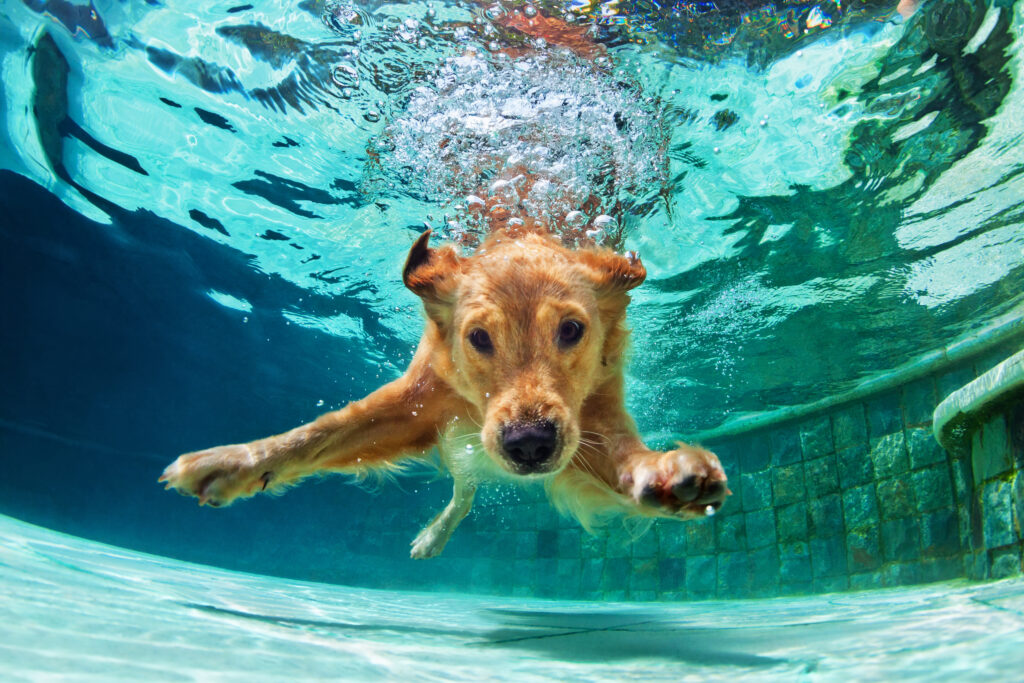
Summer in Northeast Ohio means Lake Erie, backyard pools, local ponds, and the kind of warm weekend energy that makes a splash in the water sound like the perfect activity for you and your dog. Swimming is genuinely excellent exercise for dogs, and for the right dog in the right conditions, it is one of the best warm-weather enrichment experiences available. But not every dog takes to water naturally, and introducing a dog to swimming without the right approach can turn what should be a fun, confidence-building experience into a frightening one that creates a lasting negative association with water. When The Wright Pet talks with dog owners in Eastlake, Mentor, Willoughby, and the surrounding Lake County communities about summer activities, swimming comes up regularly, and so do the questions about how to do it safely and successfully.
This guide walks through everything dog owners need to know about introducing dogs to swimming, building water confidence at the right pace, choosing safe swim locations, and recognizing when a dog needs support in or near the water.
Not Every Dog Is a Natural Swimmer
One of the most common misconceptions about dogs and swimming is that all dogs can swim instinctively. The reality is more nuanced. Most dogs have some capacity for the paddling motion that produces swimming, but instinctive paddling ability does not equal comfort in the water, efficient swimming technique, or the stamina to handle open water situations safely.
Breed plays a meaningful role in swimming aptitude. Breeds that were developed for water retrieving work, including Labrador Retrievers, Golden Retrievers, Irish Water Spaniels, Portuguese Water Dogs, and Chesapeake Bay Retrievers, typically have physical characteristics that suit them for swimming, including water-resistant coat types, webbed feet, and an affinity for water that is genuinely instinctive. These breeds often take to swimming with minimal introduction and seem to find water naturally appealing.
Other breeds have physical characteristics that make swimming genuinely challenging regardless of enthusiasm. Brachycephalic breeds, including bulldogs, pugs, and French bulldogs, have body proportions and airway geometry that make keeping their heads above water effortful and tiring. Breeds with very deep chests and narrow hindquarters, including Greyhounds and Whippets, have buoyancy characteristics that make them less naturally stable in the water than breeds with more balanced body proportions. Short-legged breeds like Dachshunds and Basset Hounds can swim but tire quickly because their leg proportions require more effort per stroke than longer-legged breeds.
Individual temperament matters as much as breed. Some dogs from water-loving breeds are genuinely cautious around water and benefit from a patient, unhurried introduction. Some dogs from breeds not known for swimming take to water enthusiastically and with apparent confidence. Meeting your specific dog where they are, rather than where you expect them to be based on breed, is the starting principle for any successful water introduction. Understanding dog behavior for new dog parents gives helpful context on reading your dog’s body language and comfort signals that apply directly to water introduction situations.
Safety Equipment Before You Start
Before any water introduction session, the appropriate safety equipment should be in place, regardless of the dog’s expected swimming ability or the depth of the water being used.
A properly fitted canine life jacket is the most important piece of safety equipment for a dog being introduced to swimming, and it is useful even for dogs who are expected to become strong swimmers. A life jacket provides buoyancy that allows a dog who is figuring out the paddling coordination to keep their head above water without panicking, which makes the learning process less stressful and more likely to produce a positive association with water. It also provides a handle on the back that allows the owner to assist or lift the dog quickly if needed, which is a practical safety feature in any introduction situation.
Fitting matters for canine life jackets. A jacket that is too loose provides inadequate buoyancy and can shift to impair the dog’s movement. A jacket that is too tight restricts breathing and movement. The jacket should fit snugly enough to stay in position during swimming while allowing the dog to move naturally and breathe comfortably. Most quality canine life jacket manufacturers provide sizing guides based on body weight and girth measurements, and following those guides rather than estimating produces better results.
A long leash or training lead attached to the dog’s collar or harness, separate from the life jacket handle, gives the owner additional control during introduction sessions in open water situations where the dog might move into deeper water faster than anticipated. The leash should be long enough to allow the dog to move naturally in shallow water without constant tension but short enough to provide quick control if needed.
How to Introduce Your Dog to Water Step by Step
The introduction process for swimming works best when it is paced by the dog’s comfort and confidence rather than by the owner’s timeline or enthusiasm. Rushing a dog through water introduction to get to the swimming stage faster is the most common mistake owners make, and it is the one most likely to produce a negative water association that takes significant time and patience to undo.
Start with shallow, calm water where the dog can stand comfortably on the bottom. A gently sloping lake or pond shore, a shallow wading pool, or the shallow end of a pool with a ramp or steps are all appropriate starting environments. The goal of the first session is simply to allow the dog to get their paws wet and experience water contact without any pressure to go deeper. Let the dog explore at their own pace, reward calm and curious behavior with treats and praise, and follow the dog’s lead entirely on how much water contact happens.
Once the dog is comfortable with paw-level water contact, encourage movement into slightly deeper water where the water reaches the dog’s chest. At this depth, the dog can still stand, but they begin to experience the buoyancy effect that water provides. Many dogs who were hesitant at the shore become more relaxed at this depth because the water is supporting some of their weight. Continue to reward confident exploration and avoid any pressure or encouragement that the dog seems to find stressful rather than motivating.
The transition from wading to swimming happens naturally when the dog moves into water deep enough that their feet leave the bottom and the paddling instinct engages. For dogs wearing a life jacket, this transition is typically less abrupt because the jacket maintains their head position above water even before the paddling coordination is fully established. Stay close during the first swimming attempts, keep one hand near the life jacket handle, and keep the first swimming sessions very short, just a few strokes, before returning the dog to where they can stand.
Build session length and water depth gradually over multiple sessions rather than pushing for significant progress in a single outing. A dog who has three or four short positive water sessions over the course of a week is significantly further along in building genuine water confidence than a dog who had one long session that included some stressful moments. Dog socialization and how it develops at different life stages provides useful context on how dogs build confidence through gradual positive exposure that applies to water introduction as well as social situations.
Choosing Safe Swimming Locations in Northeast Ohio
The Lake County and greater Cleveland area offers a range of swimming opportunities for dogs, and choosing locations that are appropriate for your dog’s skill level and the safety conditions of the day is as important as the introduction process itself.
Lake Erie access points that allow dogs vary by location and seasonal regulations, and checking current rules for any specific beach or shoreline access before arriving with your dog prevents the frustration of discovering that dogs are not permitted at a particular location. Lake Erie can have significant wave action, strong currents, and rapid depth changes that make it challenging for dogs who are newer to swimming and that warrant life jacket use even for experienced swimmers. Water quality advisories for Lake Erie are issued periodically and should be checked before allowing dogs to swim in or drink from the lake water.
Inland lakes and ponds in Lake County offer generally calmer water conditions than Lake Erie for introductory swimming sessions, with more gradual depth transitions and less current. The water quality of specific ponds and lakes varies, and avoiding bodies of water with visible algae blooms is important because certain types of algae, particularly blue-green algae, produce toxins that are dangerous to dogs who ingest them while swimming. According to the Ohio Environmental Protection Agency, harmful algal bloom advisories are issued for Ohio water bodies when conditions warrant, and checking current advisories before a swimming outing is a worthwhile safety step.
Backyard swimming pools offer the most controlled environment for dog swimming introduction because water depth, entry and exit points, and the overall environment can all be managed. Pools with steps or a gradual ramp entry are significantly more suitable for dog swimming than pools with only vertical ladder entry, because dogs need a manageable entry and exit route that they can learn to use independently. Teaching a dog to find and use the pool steps before allowing them to swim freely is a safety priority, because a dog who enters the water and cannot find the exit point independently is at risk of exhaustion and drowning even in a familiar backyard pool.
Recognizing When a Dog Needs Support in the Water
Swimming safety for dogs requires the owner to monitor continuously for signs that the dog is struggling, tiring, or stressed in the water, because dogs do not always signal these conditions as clearly as owners might expect.
Signs that a dog needs immediate assistance in the water include a paddling motion that keeps the dog’s head at or below water level rather than comfortably above it, increasingly frantic paddling that suggests the dog is working harder than their forward progress warrants, a body position that is nearly vertical in the water rather than more horizontal, vocalizing in the water, and turning in circles rather than swimming in a directed path. Any of these signs warrant immediate intervention to support or remove the dog from the water.
Fatigue is the swimming safety concern that sneaks up on owners and dogs alike, because dogs in water are often highly motivated and will continue swimming past the point where they should rest. A dog who has been swimming enthusiastically for fifteen or twenty minutes may be significantly more tired than their apparent energy level suggests, because the effort of swimming is substantially greater than the effort of running on land for the same duration. Enforcing rest periods during swimming sessions, bringing the dog back to shore or to a shallow standing area every ten minutes or so, prevents the fatigue accumulation that leads to sudden exhaustion in the water.
Post-swimming care includes rinsing freshwater from Lake Erie and other natural water sources from the dog’s coat to prevent skin irritation from salt, algae, or bacteria, checking the ears for water that may have accumulated during swimming and gently drying them to reduce the risk of ear infections, and ensuring the dog has access to fresh drinking water after a swimming session since dogs often swallow some water while swimming regardless of their technique. How to check your dog for fleas and ticks is worth reading alongside swimming preparation since natural water environments in Northeast Ohio are active tick habitats that warrant a post-outing check.
Swimming as Part of a Summer Enrichment Routine
Swimming is one of the best forms of exercise available for dogs in summer because it provides cardiovascular and muscular conditioning while generating significantly less body heat than land-based exercise at equivalent intensity. For dogs who enjoy it, a regular summer swimming routine can meaningfully reduce the impact of hot weather on their exercise and mental stimulation needs during the weeks when outdoor walking is most restricted by heat.
For dog owners in Eastlake, Mentor, Painesville, Willoughby, and Willowick who want to provide enrichment and activity on days when swimming is not available, The Wright Pet offers Day Camp for dogs who enjoy social play with other dogs and Day Sits for dogs who prefer one-on-one human interaction over group settings. Both options provide structured activity and engagement during the summer months when heat limits outdoor options, and they can be used alongside a swimming routine to provide variety in the dog’s weekly activity schedule. A day in the life at The Wright Pet gives dog owners in the area a picture of what a supervised care day looks like at the facility.
Frequently Asked Questions About Introducing Dogs to Swimming
Puppies can be introduced to shallow water from a relatively young age, with many owners beginning gentle water introduction as early as eight to ten weeks in very shallow, calm water that allows paw-level exploration without any swimming required. Full swimming introduction is generally better suited to puppies who have completed their initial vaccination series and who have enough physical development and coordination to handle the demands of swimming. There is no universal minimum age for swimming, but a gradual approach that matches the puppy’s physical and emotional development produces better outcomes than rushing the introduction for the novelty of it.
Many dogs who are initially fearful of water develop genuine comfort and even enthusiasm for it through patient, pressure-free introduction at a pace entirely set by the dog’s comfort level. The key is never forcing a fearful dog into water or using physical pressure to move them toward or into water they are reluctant to approach, because forced water exposure almost always intensifies the fear response rather than reducing it. Starting with minimal water contact in a very calm environment, rewarding any voluntary approach to water with high-value treats and calm praise, and building in very small increments over multiple sessions gives fearful dogs the best chance of developing water confidence. Some dogs with significant water fear benefit from working with a professional trainer who has experience with fear-based behavior modification before attempting swimming introduction.
A life jacket is recommended for all dogs during initial water introduction regardless of breed, and it remains a worthwhile safety tool for dogs swimming in open water with currents, waves, or depth changes, for older dogs whose stamina may be reduced, for dogs with any health condition that affects endurance or mobility, and for any situation where the owner cannot be immediately at the dog’s side in the water. Even strong swimmer breeds can encounter conditions that exceed their ability, and a life jacket provides a safety margin that costs nothing in a situation where everything goes well and is invaluable in a situation where it does not.
The first swimming session should be as short as it takes for the dog to have one or two positive experiences at whatever water depth they are comfortable with and no longer. For a dog who is comfortable wading but not yet ready to swim, that might mean five minutes of happy wading and a positive end to the session. For a dog who takes naturally to swimming, it might mean two or three swimming strokes with a positive end before fatigue or stress has any opportunity to enter the picture. Ending on a positive note when the dog is still engaged and confident is far more valuable for long-term water confidence building than extending the session to get more repetitions.
If a dog panics in the water, the immediate priority is getting them to a point where they can stand or be supported without effort as quickly and calmly as possible. Use the life jacket handle if the dog is wearing one, move slowly and calmly rather than urgently to avoid increasing the dog’s panic, and get them to shallow water or solid ground. Once out of the water, allow the dog to settle completely before doing anything else, and do not attempt to return to the water in the same session. A panic episode in the water sets back confidence building significantly and requires returning to very basic shallow water exposure in a future session with extra patience and positive reinforcement before any swimming is attempted again.
Several health conditions warrant veterinary consultation before swimming is introduced or continued. Ear conditions, including chronic ear infections, can be worsened by repeated water exposure. Skin conditions may be aggravated by prolonged water contact or by the bacteria and algae present in natural water bodies. Heart and respiratory conditions affect exercise tolerance in the water as on land, and the demands of swimming may be inappropriate for dogs with significant cardiorespiratory disease. Dogs recovering from surgery or musculoskeletal injury should have veterinary clearance before swimming, even though water exercise is sometimes recommended as rehabilitation support. When in doubt about whether swimming is appropriate for your dog’s specific health situation, a conversation with your veterinarian before the first session is always the right starting point.
Dive In the Right Way and Your Dog Will Love It
Swimming can become one of the highlights of your dog’s summer routine when it is introduced with patience, the right safety equipment, and respect for the pace your individual dog needs. Take it slow, watch your dog’s signals, and let the confidence build naturally. Call The Wright Pet at 440-462-0076 or reach out online to learn more about summer dog care options in Eastlake, Mentor, and the surrounding Lake County area.